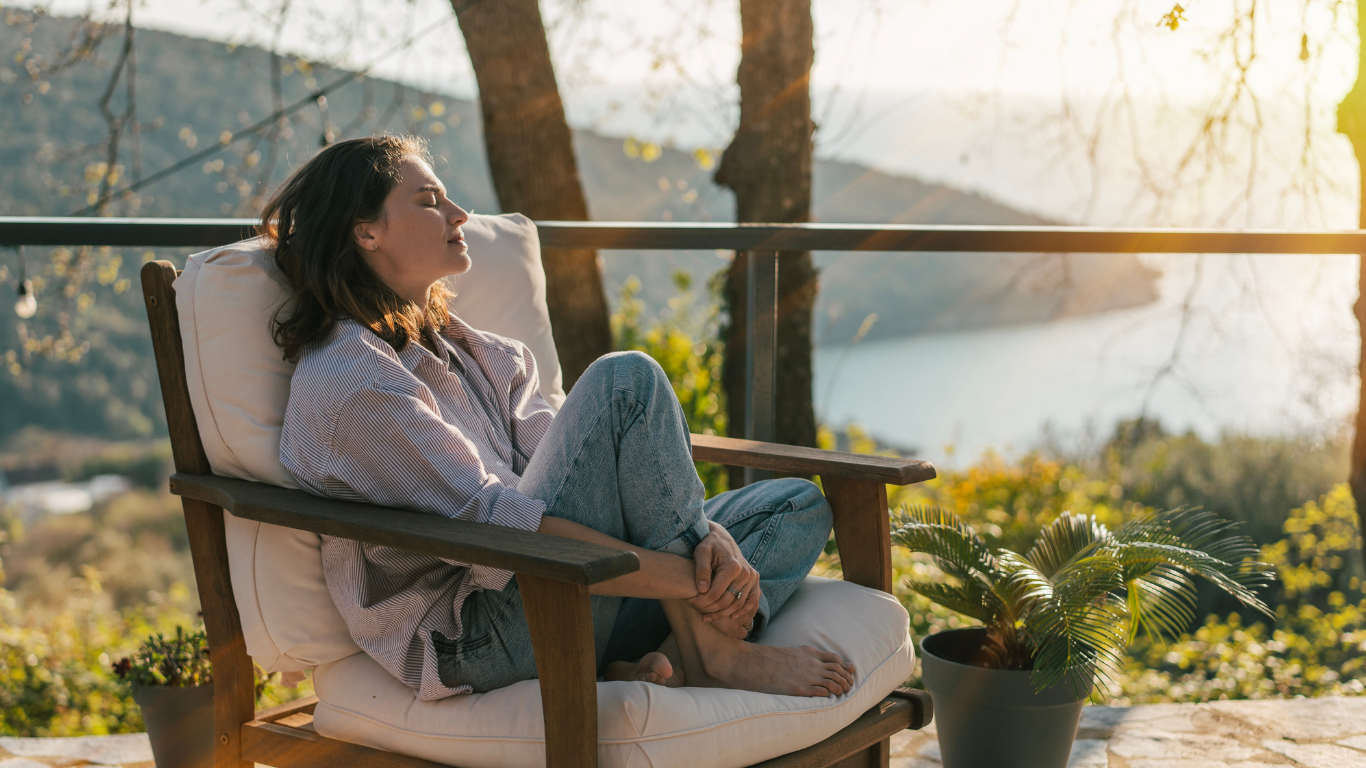
Outdoor mindfulness: How nature can help calm your nervous system
Simple outdoor mindfulness practices to reduce stress, regulate your nervous system, and create a peaceful transition from a busy day into your evening
By Aviva Boxer, Registered Psychotherapist
Most evenings, especially during the longer days of summer, after an intense day of therapy sessions, you will find me outside, breathing deeply and taking a slow, intentional walk at sunset.
I call it my sunset stroll.
It has become a beautiful ritual — a way to close the door on my workday and gently signal to my body that it is time to rest. Within minutes, I find myself noticing things I may have missed earlier in the day: robins and cardinals singing their evening songs, children laughing and playing at the nearby park, flowers sharing their therapeutic scents with the neighbourhood, and the warmth of the evening sun.
My attention shifts away from the intensity of my day and back
toward the present moment.
I have come to believe that our nervous systems need transitions, even if we do not always recognize that need.
But it wasn’t always this way.
When I first became a therapist, at the end of a long day of sessions, I would shut down my attic office, close my computer, turn off the lights, open the doors back into the rest of the house, walk down two flights of stairs, and pour myself a single glass of wine.
It was my transition ritual.
It was a quick and familiar way to move from the emotional intensity of my workday into the evening. It helped me mark that my work was finished and that it was time to shift into another part of my life.
Before becoming a therapist, I spent many years working as a journalist, where alcohol had long been woven into newsroom culture. I was not there during the era when people kept bottles in their desk drawers or smoked at their desks, but those stories were part of newsroom lore — passed down through generations of reporters and told with a mixture of humour and nostalgia.
They reflected a workplace culture where alcohol was deeply embedded in the profession. While workplaces changed dramatically over the years, gathering for drinks after work remained a familiar way for many people to decompress and connect with colleagues.
So when I became a therapist, having a glass of wine at the end of my workday felt perfectly understandable.
Over time, though, I began to notice how easy it was to rely on that one ritual as my
main way of unwinding. The issue wasn’t the glass of wine itself. What caught my attention was how quickly my brain began to associate relief and relaxation with one particular routine.
I started to wonder: What other ways could I help my body understand that the workday was over?
Around the same time, my meditation practice was becoming a bigger part of my life. I started spending more time outdoors and noticed something important.
Nature became my transition instead.
Being outside helped me release some of the emotional weight I had carried throughout the day. During therapy sessions, I intentionally set aside my own thoughts and feelings so I can be fully present with my clients. That is an important part of being a therapist, but it also means I need ways to gently reconnect with myself afterward.
My sunset stroll became a way to do exactly that.
Why outdoor mindfulness can help reduce stress
Many of my clients carry the weight of demanding jobs, caregiving responsibilities, parenting, relationships, or simply the pace of modern life. They often ask for practical ways to manage stress and regulate their nervous systems.
The good news is that spending time outdoors can be one of the simplest and most accessible places to start.
Outdoor mindfulness does not require a special setting, expensive equipment, or hours of free time. It is simply the practice of bringing your attention to the present moment while connecting with the natural world around you.
When we spend time outside, our attention naturally begins to widen. Instead of focusing only on worries, deadlines, and everything still left to do, we begin noticing what is happening around us — the sound of birds, the movement of leaves, the feeling of the breeze, the colours of the sky.
These small moments invite us to slow down.
They remind our minds and bodies that we are safe enough, in this moment, to pause.
Mindfulness in nature does not erase stress or difficult emotions. Instead, it can create a little more space around them, helping us respond rather than simply react.
Five simple outdoor mindfulness practices to try this summer
- Create a transition walk
You do not need a long hike or a perfect nature trail. Even ten or fifteen minutes outside after work, after dinner, or before bed can become a meaningful transition between one part of your day and the next.
Try leaving your phone behind or putting it away and simply noticing your surroundings.
- Engage your senses
One of the easiest grounding techniques is to intentionally notice what is around you.
Ask yourself:
- What are five things I can see?
- What are four things I can hear?
- What are three things I can physically feel?
- What are two things I can smell?
- What is one thing I can taste?
Using our senses helps bring us back into the present moment.
- Look up
Many of us spend our days looking d
own — at computers, phones, paperwork, and endless lists.
When you are outside, lift your eyes toward the trees, clouds, or evening sky. Let your vision soften. Allow yourself to notice the bigger picture.
- Take a walk without constant input
Podcasts, music, and audiobooks can be wonderful companions. But occasionally giving your brain a break from constant stimulation allows you to hear the sounds that are already there.
The birds. The wind. Your own footsteps.
Sometimes quiet is exactly what we need.
- End your day with gratitude
As you walk, notice three things you appreciated about your day.
They do not have to be big things.
A kind conversation. A beautiful flower. A moment of laughter. A good cup of coffee.
Gratitude gently shifts our attention toward what is present rather than what is missing.
Finding your own transition ritual
The beautiful thing about outdoor mindfulness is that it asks very little from us.
We do not need perfect weather, a large amount of free time, or a dramatic lifestyle change. We simply need a willingness to slow down long enough to notice what is already around us.
For me, that looks like a sunset stroll.
For you, it might be your morning coffee on the porch, five quiet minutes beneath a tree, sitting in your backyard after dinner, or taking a slow walk around your neighbourhood.
The goal is not to create another thing you have to do perfectly.
The goal is to create a small moment of care — a reminder to your mind and body that the day does not have to carry you forward at full speed.
Sometimes, what our nervous system needs most is not a complete reset.
Sometimes, it simply needs a gentle transition.
If you are finding it difficult to slow down, manage stress, or create space for yourself amid the demands of daily life, therapy can provide a supportive place to explore what you are carrying and develop tools that help you feel more balanced and connected.
At NuVista Mental Health, our therapists support individuals navigating stress, anxiety, life transitions, burnout, and the many challenges that can impact emotional wellbeing. You do not have to wait until you are overwhelmed to reach out. Sometimes therapy begins with simply recognizing that you want things to feel a little different.